
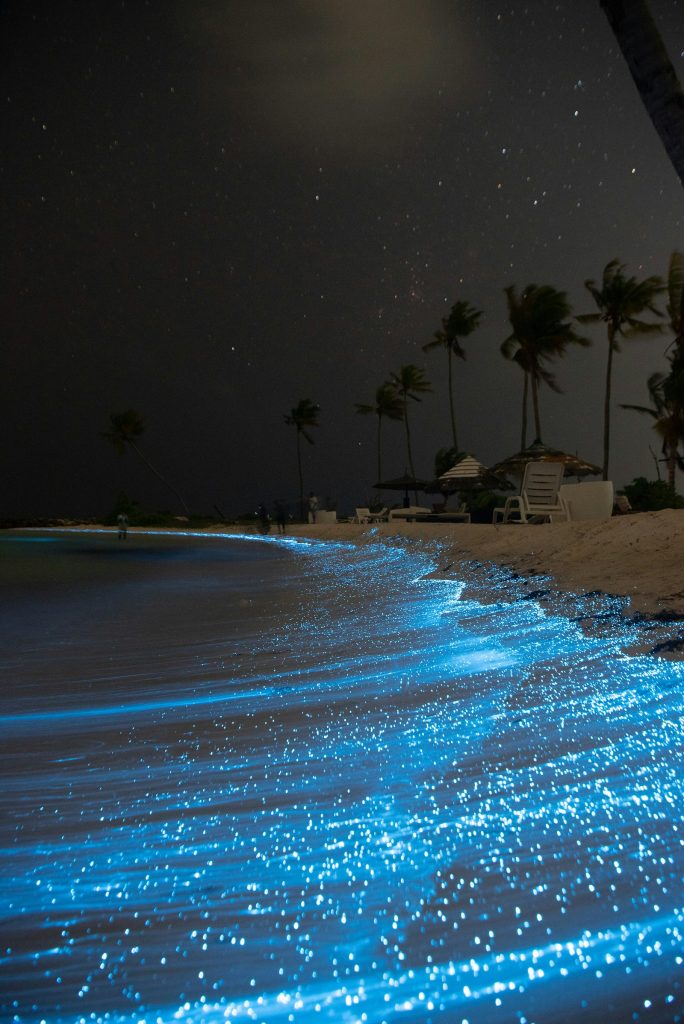
Imagine walking along a beach at night, and with every step, the sand glows. Or drifting in a quiet bay, and the water around your hand erupts in sparkling blue sparks. This isn’t fantasy it’s a natural phenomenon called bioluminescence, and it’s one of the most magical displays of life on Earth.
Bioluminescence is light produced by living organisms. Fireflies are the most famous example, but the oceans host the majority of bioluminescent species. Tiny plankton, jellyfish, and even certain types of fungi emit light through chemical reactions, usually to attract mates, deter predators, or lure prey.
Some beaches, like those in the Maldives or Puerto Rico, glow because millions of plankton light up when disturbed. In deeper waters, giant squid and anglerfish use bioluminescent lures to survive in total darkness. On land, certain mushrooms glow softly in forests, creating an eerie, otherworldly scene that seems like something out of a fairy tale.
Bioluminescence is more than a spectacle it’s a survival strategy honed over millions of years. And it’s under threat. Pollution, climate change, and coastal development are reducing these glowing populations, slowly dimming one of nature’s most spectacular shows.
Experiencing a bioluminescent night reminds us of life’s ingenuity. Even in darkness, nature finds a way to shine. And if we protect these ecosystems, the lights can keep flickering for generations to come.