
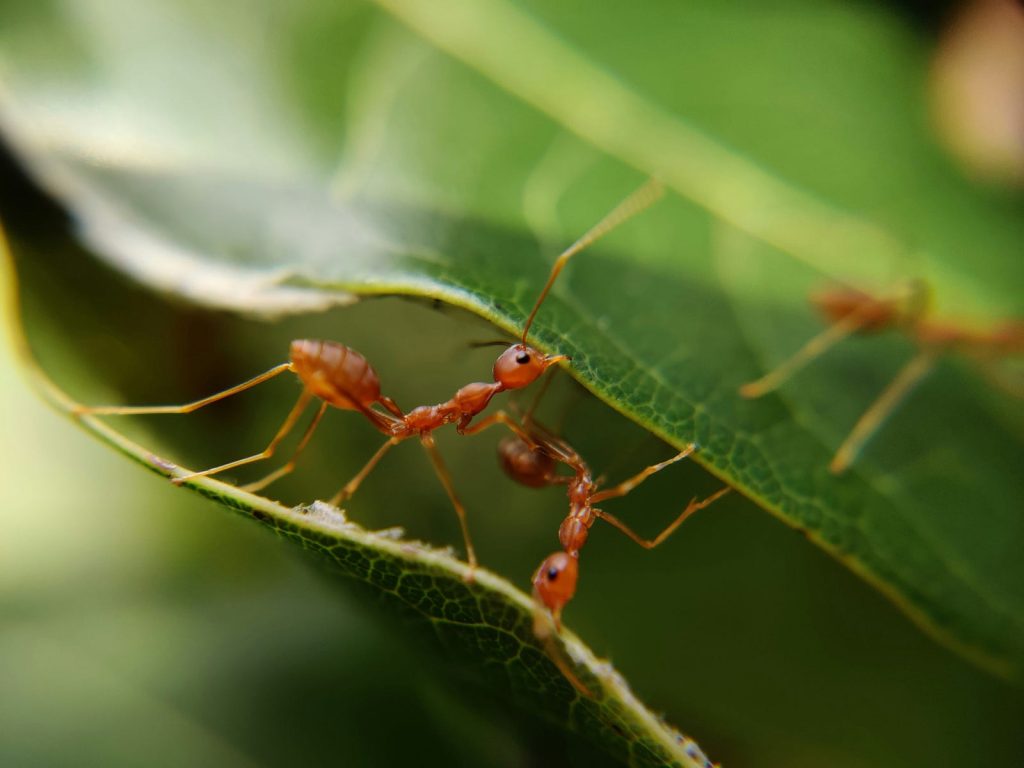
We live on the planet, but insects run it. They outnumber us, outlast us, and often outsmart us in ways most people never notice. From the ants building cities under our feet to bees orchestrating ecosystems in the air, insects are the hidden rulers of Earth.
The Invisible Architects
Ant colonies are marvels of engineering:
- Some colonies house millions of ants, with tunnels, chambers, and waste management systems rivaling human cities.
- Leafcutter ants farm fungus as food, essentially running agriculture underground.
- Termites regulate temperature in their mounds better than most modern HVAC systems.
These tiny engineers have been perfecting their societies for millions of years.
Nature’s Economists
Bees are more than pollinators: they are critical to the global food economy:
- Around one-third of the food we eat depends on bee pollination.
- Bees communicate through complex dances, sharing the location of resources with incredible precision.
- Colony collapse and pesticide use threaten not only bees but the stability of ecosystems and agriculture worldwide.
The balance of human survival is intertwined with the tiny lives of insects.
The Soundtrack of Survival
Even seemingly insignificant insects play crucial ecological roles:
- Crickets, cicadas, and other insects are vital food sources for birds, mammals, and reptiles.
- Insects help recycle nutrients, breaking down organic matter into soil-enriching components.
- Mosquitoes, while often feared, are part of complex food webs and ecological checks.
The world hums with insect activity, often unnoticed, yet it shapes life around us.
Lessons from the Smallest
Insects may be tiny, but they teach us resilience, cooperation, and adaptability:
- Cooperation allows colonies to thrive against threats much larger than themselves.
- Resourcefulness ensures survival in almost every environment on Earth.
- Adaptation shows how life evolves quickly in response to change.
Humans might think we dominate the planet, but insects quietly prove otherwise.
Next time you see a line of ants or hear a swarm of bees buzzing nearby, remember: they are not just pests. They are tiny overlords, shaping the planet in ways we cannot fully comprehend. Their societies, intelligence, and ecological impact are proof that even the smallest creatures wield enormous influence.
The world belongs as much to insects as it does to humans, and ignoring them is a mistake that could ripple through ecosystems for centuries.